



You are here:
Início » Corruption » STATE DEBT: The problem that threatens the survival of businesses
November 22, 2026 12:15
Latest update:November 21, 2026
STATE DEBT: The problem that threatens the survival of businesses
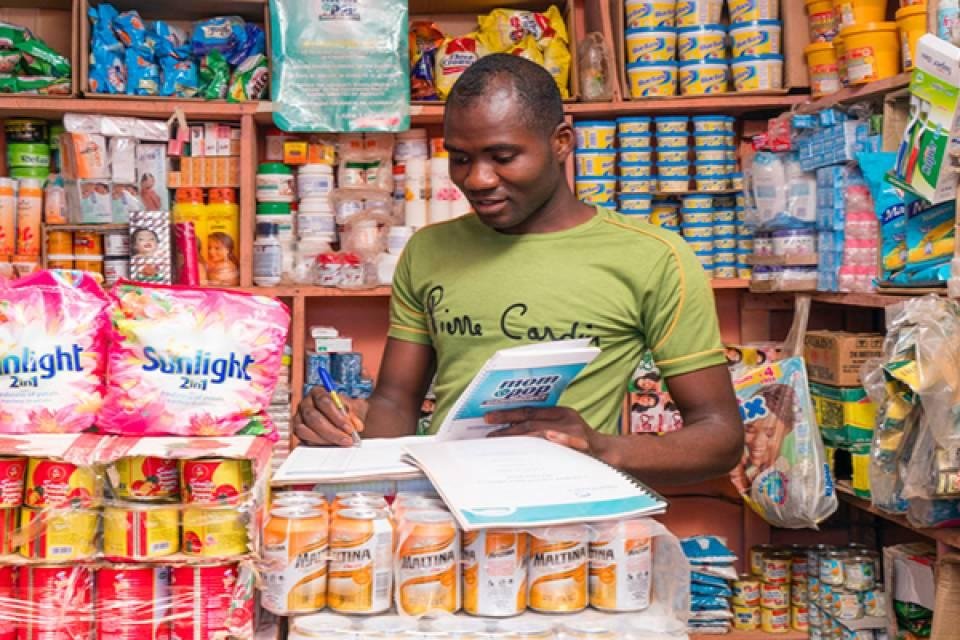
When the government delays payments, the problem is not limited to public finances. It affects companies’ cash flow, workers’ wages, suppliers, bank credit, and investment capacity. Public commercial debt is, therefore, an economic and social issue that requires transparency, predictability, and accountability.
1. A Debt That Goes Beyond the Accounting Books
The government’s debt to its suppliers is often presented as an item in the public accounts. This view is incomplete. Behind every unpaid invoice is a company that carried out a project, supplied goods, or provided a service and that, after fulfilling its obligation, is waiting for payment. Until that payment arrives, the company continues to cover salaries, taxes, rent, utilities, fuel, maintenance, interest, and commitments to third parties.
The scale of the problem becomes clearer when one looks at the amount of certified commercial debt. At the end of September 2026, the reported amount totaled 2.302 trillion kwanzas, distributed among 573 creditors and 679 cases. This is not, therefore, a series of isolated incidents, but rather a financial exposure affecting hundreds of economic operators.
2. What the Numbers Reveal
Data released in November 2026 indicate that the government plans to allocate 512 billion kwanzas in fiscal year 2027 to settle certified domestic arrears. Compared to the outstanding balance of 2.302 trillion kwanzas recorded at the end of September 2026, this amount represents approximately 22.2%. It is a significant budgetary effort, but it also shows that, even if the forecast is fully realized, a substantial portion of the debt will remain outstanding.
As of September 2026, 386.2 billion kwanzas had been paid. Even so, the debt stock decreased by only 230.8 billion. The difference is explained by the addition of new liabilities, the recognition of legal proceedings, and adjustments made throughout the period. This figure warrants attention: paying off old debts is essential, but it does not solve the problem if new debts continue to accumulate.
Indicator | Reported value |
Certified trade debt (September 2026) | 2.302 trillion Kz |
Identified creditors | 573 |
Processes | 679 |
Payments made through September 2026 | 386.2 billion Kz |
Net decrease in inventory for the period | 230.8 billion Kz |
Projected Adjustment in the 2027 State Budget | 512 billion Kz |
Weight of the forecast relative to certified inventory | About 22.2% |
Claims still pending approval | More than 1 billion Kz |
3. Sectoral concentration also tells a story
The sectoral distribution of certified debt shows a significant concentration in infrastructure construction and rehabilitation: 1.678 trillion kwanzas, equivalent to about 72.9% of the total. This is followed by groceries and food, at 208 billion kwanzas (9%); studies, inspection, and consulting, at 98.5 billion (4.3%); real estate, at 60.1 billion (2.6%); and fuels and lubricants, at 49.2 billion (2.1%).
This concentration means that delays can affect entire economic chains. In construction, for example, a company that does not receive payment may delay payments to subcontractors, transporters, material suppliers, and workers. The impact spreads beyond the State’s direct creditor.
4. When the Supplier Ends Up Financing the Government
A company that carries out a public contract and waits months for payment ends up, in practice, financing part of the government’s operations with its own funds or with credit obtained from banks and suppliers. This involuntary financing comes at a cost. Salaries are due every month; taxes have deadlines; banks charge interest; and private suppliers are not obligated to wait indefinitely.
The contract may specify a price, but that price was calculated based on certain payment terms. When payment terms are extended, the initially projected margin may disappear. A company that appeared profitable on paper can become a money-losing operation because of the cost of financing the delay.
5. The Impact on Small and Medium-Sized Enterprises
Large companies may, in certain cases, have reserves, lines of credit, or diversified portfolios that allow them to absorb prolonged delays in payment. Micro, small, and medium-sized enterprises, as a rule, have less resilience. A single high-value invoice, when left unpaid, can jeopardize payroll, halt operations, or prevent the purchase of raw materials.
That is why the settlement of overdue payments must take into account the vulnerability of creditors and the economic impact of the payments. The reference to focusing on MSMEs in the 2027 State Budget is positive, but its effectiveness will depend on clear criteria, public information, and verifiable implementation.
6. The liquidity problem and dependence on a single customer
In April 2025, the Minister of Finance acknowledged that payment delays were linked to liquidity problems and noted that some payments were taking longer than the 90 days considered desirable. On that same occasion, she advised companies to diversify their customer portfolios. It was also noted that there were businesses whose dependence on the government reached 80% or 90%.
The recommendation to diversify is prudent from a business management perspective. However, it should not be interpreted as shifting responsibility for the delay onto the supplier. The company must manage commercial risk; the government, for its part, must fulfill the commitments it has made and organize its cash flow to honor the contracts it has entered into.
7. A certified debt is not the same as a claim awaiting validation
It is essential to distinguish between certified commercial debt and claims that are still awaiting validation. Certification implies that the case has undergone verification and recognition procedures. A claim awaiting validation, on the other hand, should not be presented as a definitively recognized debt, because it may still require documentary, contractual, or financial confirmation.
Pending claims exceeded 1 billion kwanzas, according to the data released. This volume reveals a second dimension of the problem: in addition to paying what has already been certified, it is necessary to address pending cases with known deadlines and uniform criteria. The lack of information on the status of each case fuels uncertainty and hinders companies’ planning.
8. Transparency Must Accompany Every Step
Publishing an overall figure is important, but it is not enough. For creditors, citizens, and oversight bodies to be able to monitor implementation, the information must make it possible to understand how the debt is evolving, which cases have been finalized, which are pending, which payments have been made, and what criteria guide the order of settlement.
Useful public information must be up-to-date, comparable, and sufficiently detailed to allow for scrutiny, while naturally respecting legal limits regarding data protection and commercial confidentiality. Transparency is not just about publishing numbers: it is about ensuring that those numbers can be understood and verified.
9. Pay Outstanding Debts Without Creating New Ones
Clearing the backlog is a necessary measure, but it will be insufficient if the government continues to incur expenses without first ensuring its ability to pay. The problem requires discipline in contracting, realistic financial planning, oversight of budget execution, and better coordination among the agencies that contract, certify, and pay.
Before entering into a contract, the public entity must assess whether the budgetary framework and financial resources are sufficient to cover the commitment. During contract execution, it must monitor the contract and resolve any discrepancies in the documentation in a timely manner. After delivery, certification and payment must adhere to established deadlines.
10. Companies Also Bear Responsibility
The analysis cannot ignore the responsibility of suppliers. In July 2026, the National Public Procurement Service reported that more than 145 companies were barred from entering into new service contracts with the government due to prior noncompliance, with more than 80 cases pending.
This data serves as a reminder that the contractual relationship is bilateral. Companies must meet deadlines, deliver the agreed-upon goods and services, comply with technical specifications, and submit accurate documentation. The government must pay in accordance with the terms of the contract. Defending suppliers does not mean tolerating breaches of contract; it means demanding that the rules be applied fairly, predictably, and equally.
11. What Should Be Monitored in the 2027 State Budget
The allocation of 512 billion kwanzas to settle certified arrears must be monitored throughout the budget’s implementation. It is important to know how much was actually appropriated, how much was paid out, how much reached creditors’ accounts, and what effect this had on the total outstanding balance. A budget allocation is an authorization or financial projection; it does not, in and of itself, equate to an actual payment.
It will also be important to verify whether payments reduce net debt or are offset by the assumption of new liabilities. Periodic reporting of results will make it possible to assess whether the announced effort is producing an actual improvement.
12. Consequences for Employment, Credit, and Investment
When a company stops receiving payments, it may postpone hiring, reduce shifts, suspend investments, or lay off workers. It may also resort to credit to cover current expenses, thereby increasing its debt and reducing its ability to invest in the future. In extreme situations, viable companies may close not because of a lack of customers or competence, but due to a lack of liquidity.
The effect also extends to the banking sector. A company with overdue receivables from the government may show receivables on its balance sheet but lack the cash to pay its obligations. Credit risk increases, access to financing becomes more difficult, and the cost of capital may rise. Government payment delays thus become a source of vulnerability for the private sector.
13. A Practical Plan to Restore Confidence
Restoring confidence requires a verifiable commitment. The government must publish a timeline for regularization and periodic updates; explain the priority criteria; provide mechanisms for checking the status of cases; simplify document validation without compromising rigor; and prevent new contracts from creating obligations without adequate financial coverage.
There must also be a preventive mechanism. Cash flow management needs to anticipate the commitments made by various public entities, consolidate payment forecasts, and identify risks of accumulation before they turn into arrears. The solution is not just to pay better; it is to contract and manage better.
14. Public commercial debt is also a matter of trust
The government is one of the country’s main economic actors and, for many companies, a highly significant customer. When it pays on a predictable basis, it contributes to market stability, job preservation, and private investment. When it systematically misses deadlines, it sends a signal of risk that can drive companies away, increase the cost of bids, and reduce competition in public tenders.
Trust cannot be restored through announcements alone. It is restored through actual payments, reliable information, compliance with contracts, and the prevention of further arrears. Every invoice paid on time strengthens the government’s credibility; every unexplained delay weakens it.
Conclusion: The government cannot demand strong companies while leaving them without liquidity
The government’s commercial debt is not a problem that concerns only the Ministry of Finance or direct creditors. It is an issue that affects the entire economy. It impacts companies, workers, suppliers, banks, consumers, and the confidence of those looking to invest in Angola.
The 2.302 trillion kwanzas in certified debt as of the end of September 2026 illustrates the scale of the challenge. The projection of 512 billion for 2027 represents a step forward, but it does not resolve the issue. It will be necessary to make the payments, resolve pending claims, and, above all, prevent new arrears from replacing those that have been settled.
The government must be an exemplary client. This means contracting responsibly, certifying rigorously, paying predictably, and accounting transparently. Companies, in turn, must honor their contracts and manage the risks of their operations. Only with responsibility on both sides will it be possible to build a healthy contractual relationship and a public market capable of stimulating—rather than stifling—the business community.
Sources consulted
- Expansão, November 6, 2026 — “The government owes 2.3 trillion Kz to suppliers and plans to pay only 22% of that in 2027.”
- Angola Information and Communication Center (CIAM), November 13, 2026 — information on the 512 billion Kz allocation in the 2027 State Budget to settle certified arrears.
- Angola Information and Communication Center (CIAM), July 17, 2026 — Information from the SNCP regarding companies barred from entering into new contracts with the government due to prior noncompliance.
- Angola24Horas, April 26, 2025 — interview with the Minister of Finance regarding payment delays, liquidity, and customer diversification.
- Correio da Kianda, January 3, 2026 — news article on the impact of the government’s payment arrears on companies and the demand for settlement.
Editorial Note
The figures presented correspond to information disclosed as of November 15, 2026. Certified debt should be distinguished from claims that have yet to be validated. The forecast included in the 2027 State Budget should not be confused with payments that have already been made. It is recommended that figures and institutional names be verified with the original sources immediately prior to publication.
*Ribeiro Tenguna is the author of several books, including the bestseller “Quanto Vale a Vida do Africano” (How Much Is an African’s Life Worth?), and a member of Angola’s Youth Literature Brigade and the Experimental Group of the Brazilian Academy of Letters. He is a computer engineer, clinical psychoanalyst, and conflict resolution specialist; he holds an MBA (Master of Business Administration) from the Getúlio Vargas Foundation (FGV) and writes weekly for the PTP.
Access Counter:
PUBLIC TRANSPARENCY PORTAL – ANGOLA
Propitiating access to information
Municipality of Talatona, Urban District of Benfica, Estrada Lar do Patriota, Rua V, Travessa II, n.º 584-A
Postal Address: Brito Godins Postal Station, Bairro Kinaxixi, Correios de Angola, PO Box n.º 10196, Luanda – Angola
Contact phone: +244 934 035 233
COPYRIGHT © 2022 – THE PUBLIC TRANSPARENCY PORTAL IS PROPERTY OF PRO BONO ANGOLA® – ALL RIGHTS RESERVED. DEVELOPED BY 15INTELLIGENCE
