



You are here:
Início » Corruption » Public Works: Who Pays for the Costs of Successive Adjustments?
November 22, 2026 12:27
Latest update:November 21, 2026
Public Works: Who Pays for the Costs of Successive Adjustments?
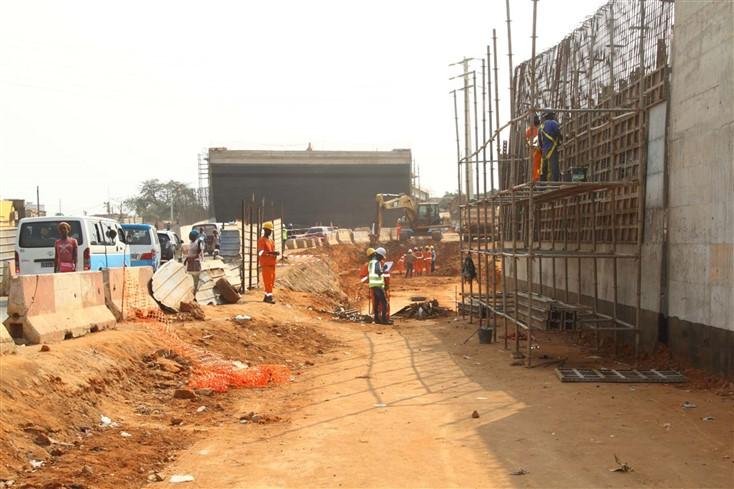
An analysis of public contracts, the additional costs of construction projects, the responsibility of managers, and the financial impact of contract revisions on Angolan taxpayers’ money.
There is a question that should be asked at the inauguration of every road, hospital, school, bridge, or public building in Angola: How much did it actually cost to build this project?
The question seems simple, but the answer is not always so. The amount announced at the launch of a project may not correspond to the amount the government ultimately pays once the project is completed. Along the way, there may be price revisions, contract amendments, additional work, design changes, extensions of completion deadlines, and other expenses that alter the initial financial commitment.
Under certain circumstances, these adjustments are legitimate and necessary. A public works project does not take place in an unchanging economic environment. Material prices may rise, transportation costs may fluctuate, geological conditions may reveal difficulties that were unknown during the initial studies, and certain unforeseen situations may require technical solutions different from those initially planned.
The problem begins when cost adjustments cease to be exceptional occurrences and instead become—almost like a predictable step—part of the execution of certain public contracts.
When a project initially budgeted at a certain amount ends up costing substantially more, someone needs to explain what happened. It is not enough to present a new figure and offer a general justification that costs have increased. It is necessary to demonstrate what factors caused the increase, who identified them, who assessed them, who authorized the change, and, above all, whether the government received a benefit commensurate with the additional money it decided to spend.
Ultimately, there is one question that cannot be ignored: when the cost of a public works project increases, who truly bears that difference?
The immediate answer is well known: the government pays. But the government is not an abstract entity that produces money independently of the economy. Its resources come, among other sources, from taxes paid by citizens and businesses, revenues from the exploitation of natural resources, fees, income from public assets, and borrowing.
Therefore, when a public contract undergoes a price adjustment, the discussion should not be limited to the government and the contractor. The issue also concerns the citizens who finance the project, the business owners who depend on an economy with sustainable public finances, and the future generations who may have to bear the financial commitments made today.
This is precisely why successive contractual adjustments warrant a more in-depth analysis.
1. Is the adjustment an economic necessity or a planning failure?
To understand the problem, we must first recognize that not all increases in the value of a construction project represent a waste of public funds or irregularities in the contracting process.
Public works are complex projects. They depend on engineering studies, topographic surveys, geotechnical analyses, the availability of materials, logistics, labor, equipment, and financing conditions. A significant change in any of these factors can affect the initially estimated cost.
Imagine the construction of a 60-kilometer road. During the design phase, engineers estimate the volume of earth to be moved, the necessary materials, transportation costs, drainage, bridges, and other infrastructure components.
If, during construction, geological conditions different from those anticipated are identified, it may be necessary to modify the design. If material prices rise significantly, the contractor may face costs that were not included in the initial bid. If changes are mandated by the contracting authority, additional work may also arise.
In such cases, a contract revision may be technically justifiable.
However, one question warrants consideration: to what extent do these increases stem from truly unforeseeable events, and to what extent do they result from inadequate studies, imprecise estimates, or decisions made without the necessary preparation?
This distinction is fundamental.
It is one thing for the government to have to respond to an extraordinary circumstance that it could not reasonably have anticipated. It is quite another to have to pay more because the project was poorly designed, because quantities were calculated incorrectly, or because certain essential elements were not properly studied before the bidding process began.
When a road requires a bridge that was not properly considered in the design, for example, it is necessary to determine whether the need arose from an unforeseeable condition or from a failure in the survey and design of the project.
Responsibility should not automatically be attributed to the designer, the supervising engineer, or the contractor. Nor, however, should it be accepted that all shortcomings in preparation are subsequently resolved with additional state funds.
Planning has a cost. The absence of planning does as well. The difference is that the latter can end up costing much more.
2. The Recent Case: Six Contracts, Five Provinces, and New Financial Burdens for the State
The discussion has taken on particular relevance with the publication of Presidential Order No. 414/26, dated November 9, which authorized changes to the total prices of six public works contracts and the respective supervision services.
The decision, reported by Novo Jornal on November 12, 2026, covers projects in the provinces of Lunda Sul, Huambo, Huíla, Zaire, Uíge, and Cabinda. The justification provided relates to the abnormal and unforeseeable increase in material and labor costs, as well as the need to restore the economic and financial balance of the contracts. See the Novo Jornal article.
The projects covered include:
The Saurimo Ring Road in Lunda Sul. Lot 10, spanning 60 kilometers, will see an increase of more than 9.5 billion kwanzas due to additional work.
National Highway EN 120, between Cuima and Chipindo. The 56-kilometer section, including its bridges in Huambo and Huíla, will receive an additional 7.39 million euros.
Supervision of National Highway EN 120 in Zaire. The supervision budgets for the Mpala/Nóqui and Lucossa/Mpala sections have been adjusted to 2.05 billion and 1.78 billion kwanzas, respectively.
Social housing in Uíge. The project to build 500 social housing units and related infrastructure now has a total cost set at $37.9 million.
Social housing apartments in Buco Zau, Cabinda. The cost of building 120 social housing apartments was revised upward by more than 10.8 billion kwanzas.
These figures were reported by Novo Jornal. It is important to clarify that not all of them necessarily represent the amount of the increase: in some cases, the publication presents the new total contract value, while in others, it explicitly identifies an increase. Therefore, it is not correct to add all the numbers together and present them as an additional cost.
Novo Jornal
There is, however, one issue that warrants attention.
The authorization of financial amendments to various contracts—spanning different provinces and involving different types of infrastructure—should be accompanied by sufficiently detailed information to allow for an understanding of the nature of the increases.
What has changed in each project? Which materials saw extraordinary price increases? What percentage of the additional cost is attributable to labor? How much is due to unforeseen work? What was the original value of each contract? And what will the final cost be after the changes?
These questions do not call into question the legitimacy of the decisions made. They seek to understand the rationale behind them and allow the public to monitor the use of public resources.
It is also important to distinguish between presidential authorization and the actual formalization of contract amendments, the execution of additional work, and the corresponding payments. These are different stages and must be monitored separately.
3. The cost of adjustments does not begin when the contractor requests additional funds
One of the most common mistakes in analyzing public works projects is to focus all attention on the moment when the contractor requests a price revision.
In reality, the final cost of a project begins to be determined long before the contract is signed.
It begins with the identification of the public need, the preparation of feasibility studies, the design of the project, the definition of technical specifications, and the budget estimate.
It is at this stage that the assumptions guiding the entire process are established.
If the studies are incomplete, if quantities are miscalculated, or if site conditions are not properly analyzed, the likelihood of changes arising during construction increases.
The government may, therefore, end up paying for problems that should have been identified before construction began.
There is yet another aspect: the quality of the initial estimate.
When a public entity prepares a request for proposals, it needs to know, as accurately as possible, how much the project is expected to cost. This estimate is used to evaluate proposals, organize financing, and determine the project’s economic feasibility.
An artificially low estimate can create a false perception of financial feasibility. The project appears to fit within the available budget, the contract is awarded, and construction begins. Later, additional needs arise and the cost increases.
One should not conclude that this scenario occurs in every contract. But it is precisely to avoid situations of this nature that the quality of preliminary studies and the rationale behind pricing are so important.
Law No. 41/20, of December 23, the Public Contracts Law, establishes in Article 3 principles such as cost-effectiveness, integrity, competition, publicity, transparency, and sustainability. Article 5 also provides for the use of objective criteria in setting the estimated value of contracts, with reference to prevailing market prices. See Law No. 41/20.
The question is whether these principles are being sufficiently observed during all phases of the projects.
4. What does the law say about additional work and contract amendments?
The existence of legal mechanisms for amending public contracts does not mean that any increase can be approved without limits or justification.
Angolan law establishes conditions for performing additional work and for amending contracts.
Law No. 41/20 contains specific provisions on this matter.
Article 40 establishes rules regarding changes to the amount of authorized expenditure and the authority to approve such increases. Article 197 addresses changes to the project and sets limits on additional work, in accordance with applicable law.
More specifically, Articles 199 and 203 regulate the performance of additional work and unforeseen work, including the requirement for an order from the project owner and formalization through a contract amendment.
The law establishes, in certain situations, a cumulative limit of 15% of the contract award amount for additional work, without prejudice to the annual rules governing the execution of the General State Budget. The specific application depends on the nature of the change and the legal framework of the contract.
Lex.AO
This point warrants an explanation.
An addendum should not serve as a blanket authorization to indefinitely increase the value of a contract. It must correspond to an identified need that is technically justified, financially evaluated, and legally authorized.
It is also important to distinguish between three situations that are sometimes conflated in public debate.
The first is price revision, which seeks to reflect changes in the costs of production factors, in accordance with applicable legal and contractual conditions.
The second involves additional work, which consists of necessary services that were not initially foreseen or that result from changes to the project.
The third is the restoration of the contract’s economic and financial balance, which seeks to reestablish the financial terms initially agreed upon when circumstances arise that justify such intervention.
These are not equivalent concepts.
The difference matters because each mechanism has its own assumptions, documentation, and financial consequences.
A price adjustment should not be used to conceal a design flaw. Similarly, additional work should not be used to introduce changes that should have been subject to a new competitive bidding process.
Transparency requires that the government clearly identify the basis for each change.
5. The problem of supervision: who monitors rising costs?
When discussing public works, a great deal of attention is typically paid to the contractor performing the work and the contracting entity.
However, there is a third component whose importance does not always receive the necessary attention: supervision.
Supervision must monitor the physical and financial progress of the project, verify that the work complies with the design, track the quantities completed, evaluate the materials used, and confirm that payments correspond to the services actually rendered.
It is not merely a matter of observing whether workers are on the construction site or whether the machinery is in operation.
It is necessary to verify whether what is being carried out corresponds to what was contracted and whether the amounts submitted for payment are technically justifiable.
The Public Contracts Law establishes, in Articles 269 and 270, the powers and functions of supervision, including monitoring contractual amendments, verifying the work, and controlling the project’s accounting. Article 366 also provides for technical, financial, and legal oversight powers over public contracts.
Lex.AO
This responsibility becomes particularly important when there are requests for price adjustments.
Imagine that a company requests a contract increase, claiming that a certain raw material has experienced an extraordinary price increase.
The audit team must be able to verify the information provided, analyze reference prices, assess the necessary quantities, and determine whether the requested increase actually corresponds to a rise in execution costs.
If additional work is requested, it is also necessary to confirm its necessity, quantify the services, evaluate the prices, and verify whether the work was actually performed.
The supervising authority cannot limit itself to simply validating documents prepared by the interested parties. It must produce an independent and properly substantiated technical assessment.
There is another issue worth examining in supervision contracts: when a project undergoes adjustments, the supervision services may also see their own costs change. It is necessary to determine whether these increases result from a longer duration, greater complexity, a change in the scope of services, or other concrete grounds.
The goal is not to cast suspicion on the inspectors or contractors. It is to ensure that each party fulfills the obligations it has assumed.
6. Could the additional funds be used to finance other needs?
This is one of the most important aspects of the discussion.
Public funds are limited. The country has many needs, and the available resources must be allocated among different priorities.
When the government decides to increase the cost of a project, it is taking on an additional financial commitment. Even when such a commitment is necessary, there is an opportunity cost.
The funds allocated to cover a contract increase are no longer available for other expenditures, unless there is additional funding or a reallocation that preserves the remaining appropriations.
Consider the case of a road project whose cost increases by several billion kwanzas.
That money could, under certain circumstances, finance the renovation of a school, the purchase of hospital equipment, water supply systems, small municipal roads, or programs to support domestic production.
This does not mean that the road project is any less important. A road can improve the distribution of agricultural products, facilitate access to hospitals, reduce transportation costs, and stimulate economic activity.
The point is that every public spending decision must be evaluated not only based on the benefits of the project in question, but also in light of the alternatives that can no longer be funded.
That is why the adjustment of a contract should not be analyzed in isolation.
We must ask whether the increase is proportional to the expected public benefit, whether there are technically viable alternatives, and whether completing the project still represents the best use of available resources.
A more expensive project may still be economically justifiable. But that conclusion must result from an assessment, not an assumption.
7. When the government pays more, do citizens get more?
An increase in the cost of a project should not be accompanied solely by a change in the contract’s financial value. It should also be accompanied by a demonstration of the additional results or the conditions that justify the new commitment.
If a road ends up costing more, citizens should be able to know whether the length has increased, whether bridges have been added, whether there have been structural changes, whether the quality of the materials has improved, or whether the increase is simply intended to offset rising construction costs.
If a housing project now has a higher total cost, it is necessary to understand whether the number of housing units remains the same, whether additional infrastructure has been added, whether the quality of construction has changed, or whether there has merely been a financial revision.
This distinction is essential.
A project may become more expensive without producing more infrastructure. It may cost more because material prices have risen, even while maintaining exactly the same scope and quality.
In such cases, the government may be paying more to receive what it had already contracted for.
This is not necessarily irregular. It may be a legitimate consequence of economic conditions. But it needs to be clearly explained.
Citizens have the right to know the relationship between the additional funds and the expected outcome.
Transparency goes beyond simply disclosing the value of a contract. It requires information about what was contracted, what was changed, what was carried out, and what was actually delivered.
8. The Risk of Turning the Initial Price into a Mere Reference
There is an additional problem when price adjustments become recurrent in a particular sector or set of projects.
If a project is contracted for a certain amount and, during execution, undergoes several changes, the initial price may end up losing some of its usefulness as a reference for evaluating the efficiency of the contract.
The public bidding process selects a proposal based on specific conditions. Bidders submit prices, deadlines, and technical solutions, and the contracting entity makes a decision.
However, if the contract subsequently undergoes substantial financial changes, it becomes necessary to assess whether the initially selected proposal still represents the best value for money.
Consider two companies competing to build a road.
The first submits a bid of 20 billion kwanzas. The second submits a bid of 23 billion.
The first is selected for offering the most competitive price.
However, during execution, the first company’s contract undergoes changes that raise the total cost to 28 billion kwanzas.
The question that inevitably arises is this: if the final value of the first bid exceeds the price initially submitted by the second bidder, does the original decision still represent the most economically advantageous solution?
The comparison, on its own, does not prove any irregularity. The second bid could also have undergone changes, and the two contracts could have different technical specifications.
But the situation demonstrates why contractual increases need to be analyzed in light of the principles of competition and cost-effectiveness.
If the amendments are so significant that they alter the economic nature of the contract, it is legitimate to question whether the government should have considered a different procurement procedure.
Competition should not exist only at the time of award. Its purpose is to protect the public interest throughout the entire procurement process.
9. Information That Should Be Made Public With Each Contract Adjustment
One of the most effective ways to improve oversight of public works projects is to make contract information more accessible and comparable.
Whenever a contract undergoes a financial adjustment, it should be possible to consult, in a single location, the key details necessary to understand the decision.
The first is the original contract value, along with the date of signing and the identification of the contracting public entity and the awarded contractor.
The second is the technical basis for the amendment. Citizens should be able to determine whether the increase results from a price adjustment, additional work, design changes, geological conditions, extended deadlines, or other circumstances.
The third is the exact amount of the authorized increase, presented separately from the new total contract value.
The fourth is the percentage increase relative to the initial value and the cumulative value of all previous amendments.
The fifth is the impact on the completion deadline. A project that receives additional funding may also have its deadline extended, and this information must be disclosed.
The sixth item is the identification of the entity responsible for oversight and the availability of monitoring reports, within the applicable legal limits.
The seventh item is the financial status: how much has been paid to date, how much remains to be paid, and what financial commitment still exists.
Finally, the physical status of the project must be published. What is the percentage of completion? What work has been completed? What work remains to be done? Is the infrastructure ready for use?
This information would make it possible to build a history of each project, sparing citizens the need to search through scattered documents to understand the actual cost of a project.
It would also allow for comparisons between similar projects and help identify patterns that warrant further investigation.
For example, if a certain type of project involves frequent cost adjustments, it would be possible to analyze whether the problem is related to project preparation, contracting mechanisms, market conditions, or contract management.
Without organized data, the discussion relies on isolated news reports and institutional statements.
With organized data, it becomes possible to track trends and demand well-founded explanations.
10. What should be investigated regarding the six recently revised contracts?
The case of the six contracts authorized in November 2026 offers a concrete opportunity to deepen the debate.
A documentary investigation should begin by obtaining the original contracts, the proposed or approved amendments, the technical reports justifying the increases, and the expenditure authorization documents.
From there, it would be possible to make a case-by-case comparison of each project.
In the case of the Saurimo Ring Road, for example, it is important to identify the additional work that justified the increase of more than 9.5 billion kwanzas. What is this work? Was it included in the initial project? Does it result from conditions that could not have been identified earlier? What is the scope of these works, and how were their respective prices calculated?
On National Highway 120, between Cuima and Chipindo, it is important to understand the relationship between the 7.39 million euro cost increase and the work initially contracted. What factors justified the increase? Were there changes to the route, the bridge structures, or the construction conditions?
Regarding the supervision contracts in Zaire, it must be clarified what led to the new figures and whether there were changes in the duration or scope of the contracted services.
In Uíge, the 500-unit social housing project warrants a comparison between the initially projected cost and the new total cost of $37.9 million. It is important to know the cost per unit, the scope of the included infrastructure, and the number of units actually scheduled for delivery.
In Cabinda, the cost increase of more than 10.8 billion kwanzas for the 120 social housing apartments in Buco Zau calls for particularly careful analysis. It is necessary to understand what the initial price was, what the technical grounds for the increase were, and what the final cost per apartment will be.
These questions do not imply that there was mismanagement, waste, or irregularities in the contracts. They are necessary to assess whether the increases were adequately justified and whether the government is protecting the public interest.
It would also be important to seek clarification from the Ministry of Public Works, Urban Planning, and Housing, the Ministry of Finance, and the entities responsible for overseeing the projects.
The contracting companies should also have the opportunity to explain the grounds for their requests for revision, present supporting evidence, and respond to the questions raised.
A serious investigation does not seek to assign blame in advance. It seeks out documents, compares accounts, and establishes the facts.
11. The problem is not just how much the government pays, but how much it can avoid paying unnecessarily.
Responsible management of public works begins long before the contract is awarded and continues after the project is inaugurated.
The government needs to improve the quality of feasibility studies, ensure that construction drawings are sufficiently detailed, strengthen the technical capacity of contracting entities, and guarantee independent and effective oversight.
It also needs to evaluate the performance of designers, contractors, and supervisors.
When a contractual change results from an unforeseeable circumstance, there must be a transparent mechanism to address the situation.
When it results from an avoidable failure, it is necessary to determine responsibility and correct the procedures that allowed the problem to reach the execution phase.
It is unreasonable for the government to treat all changes as inevitable events without seeking to understand the causes behind them.
Similarly, it would be unfair to automatically transfer all the risks of a complex economic activity to contractors. Companies also need balanced and predictable contractual terms to carry out the work to a high standard.
The balance lies in ensuring that the government does not pay more than it owes, but also does not create conditions that make it impossible to complete the projects or compromise the quality of the infrastructure.
Effective management of public contracts does not simply mean spending less. It means achieving the best possible result with the available resources.
12. Who Pays, After All?
The question that serves as the title of this analysis has both a financial and an institutional answer.
Financially, the State pays, through the public funds it administers. And, ultimately, it is the citizens and the economy that bear the cost of decisions made in the name of the collective interest.
Institutionally, responsibility cannot be attributed to a single entity without knowing the circumstances of each contract.
The project owner has responsibilities in the preparation and management of the project. The designer is responsible for the quality and consistency of the technical elements they have produced, in accordance with their obligations. The contractor must perform the work in accordance with the contract and properly justify the requests they submit. The supervising body must verify both the physical and financial execution of the project. The competent authorities must ensure that any changes comply with the law and that additional resources have adequate funding and authorization.
Each stakeholder has a role. Each role involves responsibilities.
The fact that a construction project undergoes a price adjustment does not, in and of itself, constitute evidence of an irregularity. Nor, however, should it be viewed as an administrative event that requires no explanation.
When the cost of a public works project increases, the information provided must increase in equal proportion.
Citizens need to know how much was added, why, on what grounds, who authorized it, who oversaw it, and what results will be delivered.
It is at this point that transparency ceases to be merely the publication of documents and begins to fulfill its true function: to allow decisions regarding public resources to be understood, evaluated, and held accountable.
Angola needs roads, hospitals, schools, bridges, water supply systems, and public housing. It needs infrastructure capable of improving productivity, facilitating the movement of people and goods, and creating better living conditions.
But it also needs to know how much this infrastructure costs, why it costs that much, and whether the money invested is producing the expected results.
A road does not become more important simply because it became more expensive. A hospital does not provide better services simply because it received a larger budget. Social housing does not fulfill its purpose simply because it was built.
The value of a public works project must be measured by the benefit it provides to society, by the quality it delivers, and by the responsibility with which resources were used.
Public funds do not belong to those who authorize their use, nor to those who are awarded the contract. They belong to society. And society has the right to know how much it pays for each project, why it pays, and what it receives in return.
Editor’s note: The figures and facts regarding the six contracts were taken from information published by Novo Jornal on November 12, 2026. The legal analysis is based on Law No. 41/20 of December 23. The final publication of this article must be accompanied by the full text of Presidential Order No. 414/26, the original contracts, their respective addenda, and the supporting technical documents. The available news report does not, on its own, allow for determining the total additional cost of the six projects.
Documentary sources for this article
1. Novo Jornal — President of the Republic authorizes financial adjustments for six major public works projects (November 12, 2026).
2. Correio da Kianda — Public works contracts in Uíge, Cabinda, Zaire, Huambo, and Lunda Sul will be amended.
3. Law No. 41/20, of December 23 — Public Contracts Law.
*Ribeiro Tenguna is the author of several books, including the bestseller “Quanto Vale a Vida do Africano” (How Much Is an African’s Life Worth?), and a member of Angola’s Youth Literature Brigade and the Experimental Group of the Brazilian Academy of Letters. He is a computer engineer, clinical psychoanalyst, and conflict resolution specialist; he holds an MBA (Master of Business Administration) from the Getúlio Vargas Foundation (FGV) and writes weekly for the PTP.
Access Counter:
PUBLIC TRANSPARENCY PORTAL – ANGOLA
Propitiating access to information
Municipality of Talatona, Urban District of Benfica, Estrada Lar do Patriota, Rua V, Travessa II, n.º 584-A
Postal Address: Brito Godins Postal Station, Bairro Kinaxixi, Correios de Angola, PO Box n.º 10196, Luanda – Angola
Contact phone: +244 934 035 233
COPYRIGHT © 2022 – THE PUBLIC TRANSPARENCY PORTAL IS PROPERTY OF PRO BONO ANGOLA® – ALL RIGHTS RESERVED. DEVELOPED BY 15INTELLIGENCE
